KARPAK DEV
Apr 10, 2025
KPK Tokenomics Model
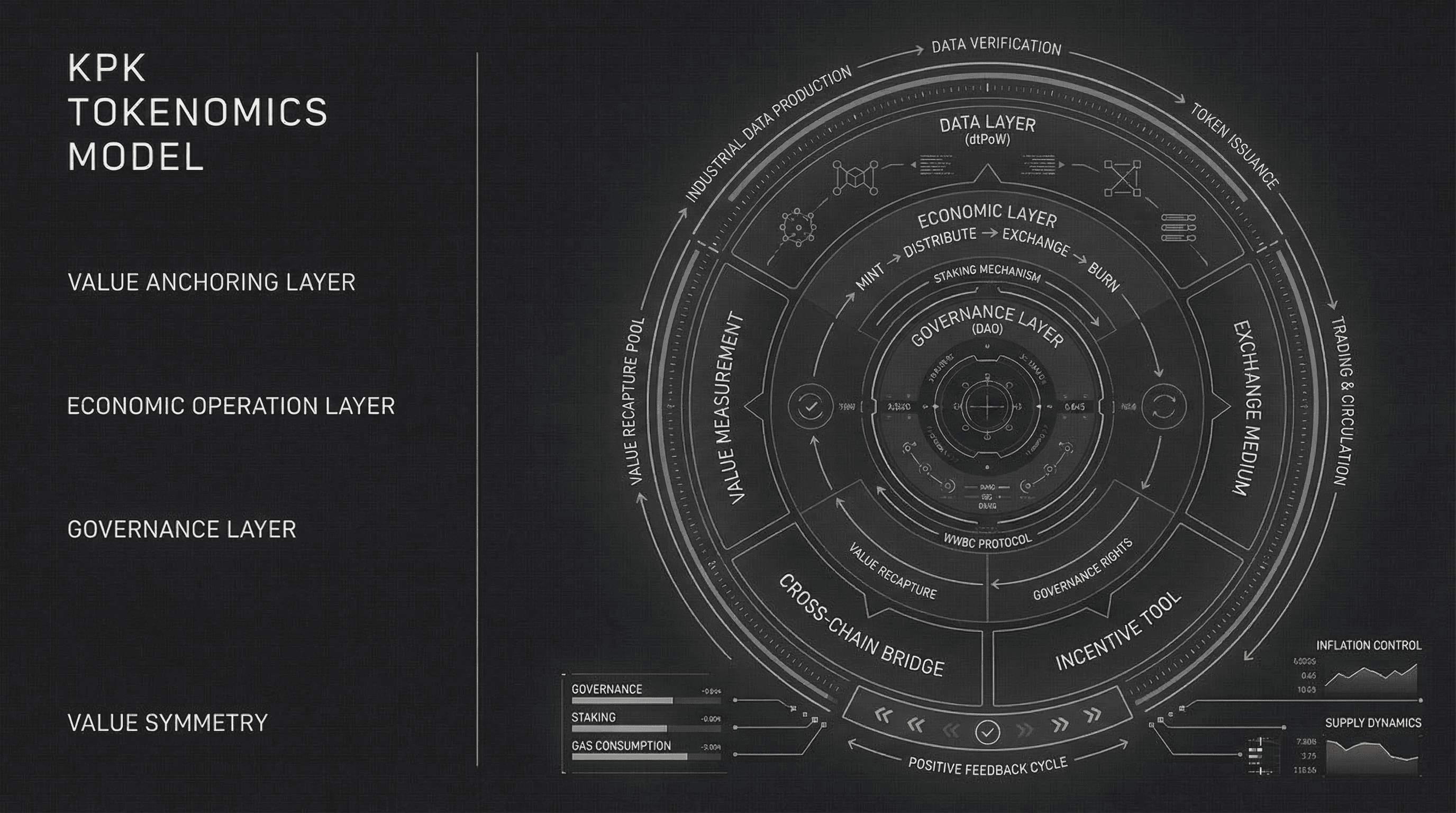
Traditional tokenomics models often suffer from severe inflationary issues, speculative volatility, and a complete disconnection from the real economy. The KARPAK tokenomics model systematically addresses these systemic flaws by introducing a sustainable, data-driven economic framework where the native token, KPK, directly anchors real-world industrial behaviors and data activities.
The KARPAK Tokenomics Model
Unlike conventional mainchain tokens that primarily serve as network gas or governance tools, KPK functions as a comprehensive economic indicator system. It maps the entire lifecycle of "data production, circulation, and utilization." The model is designed to achieve three primary objectives:
Theoretical Innovation: Transitioning the monetary issuance logic from "computational proof of work" to "data value contribution."
Industrial Adaptability: Ensuring the economic model accurately reflects real-world industrial metrics, such as mobility data, carbon emissions, and energy utilization.
Institutional Sustainability: Implementing mathematical regulatory functions to control inflation, diminish reward emissions over time, and achieve long-term, steady-state growth.
Theoretical Framework and Methodology
The core economic logic of KARPAK is built upon the Data-based Proof of Work (dtPoW) mechanism. This framework fundamentally reverses the energy-consuming incentive logic of traditional blockchain networks, replacing virtual computing power competition with industrial coopetition.
Data as Labor: Every industrial behavior (e.g., commuting, parking, charging) generates verifiable data. The system allocates KPK based on the authenticity and economic weight of this data, institutionalizing the concept that "data equals labor."
Methodology: The model is constructed using a combination of system modeling and dynamic economic analysis. It operates under the hypotheses that the ecosystem maintains a quasi-closed-loop state, industrial data grows continuously with dtPoW verification, and user participation is driven by rational expectations.
Overview of the KPK Tokenomics Model
The KPK ecosystem operates on the core principle of "Value Symmetry," ensuring that the existence of every token unit corresponds to tangible data evidence and social utility. The architecture is divided into three functional layers:
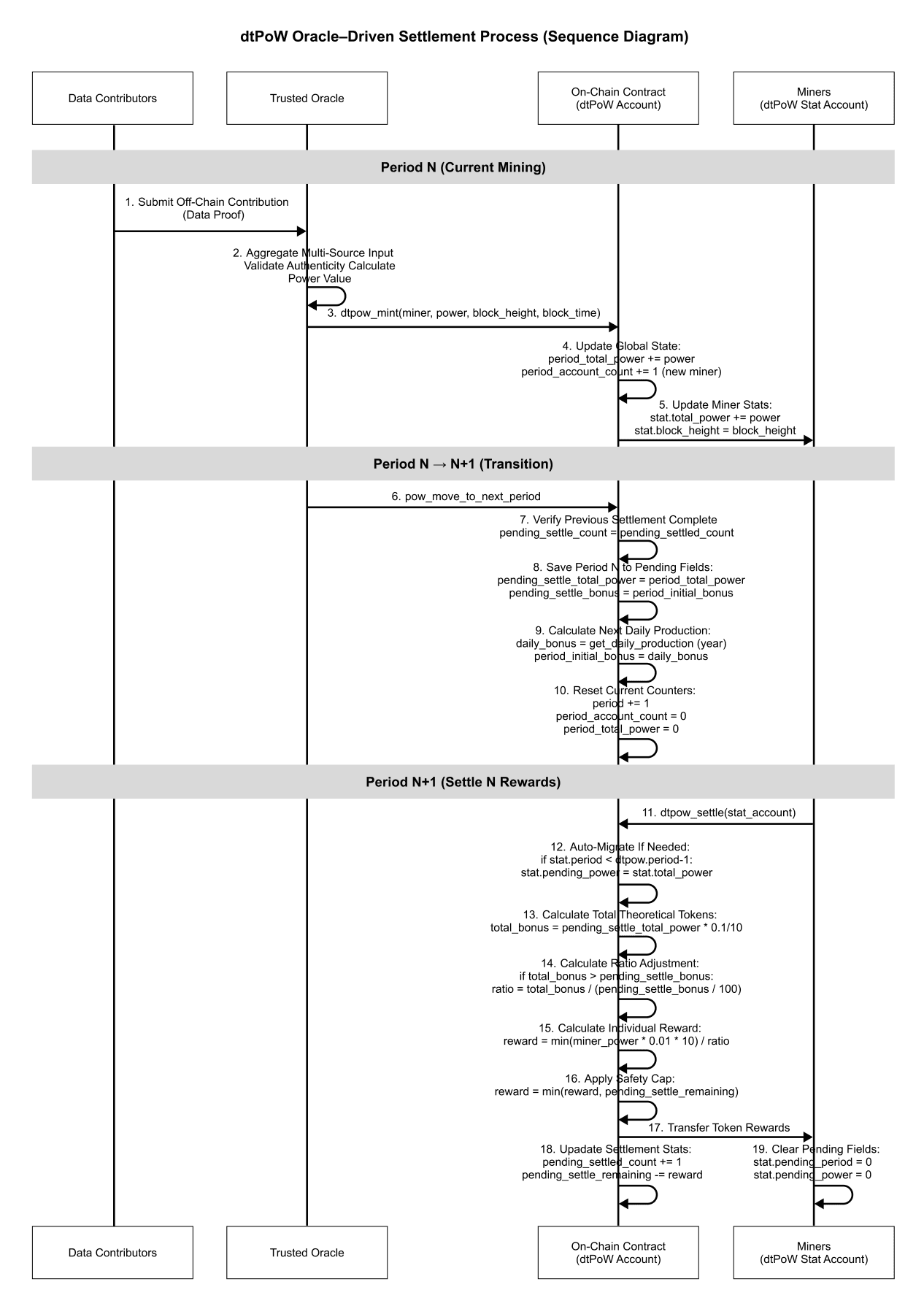
Value Anchoring Layer (Data Layer): Token issuance is strictly based on the authenticity of industry data, which is weighted and verified by the dtPoW mechanism.
Economic Operation Layer (Economic Layer): Manages the full lifecycle of the token, including minting, distribution, exchange, and redemption (burning).
Governance and Regulatory Layer (Governance Layer): Dynamically controls total supply, inflation rates, and incentive ratios via DAO governance and smart contract parameter adjustments.
Within this ecosystem, KPK assumes six distinct functional roles: a unit of value measurement, a medium of exchange, an incentive tool, a governance voting right, a value recapture medium, and a cross-ecosystem bridge asset. Together, these elements form a continuous positive feedback loop of "Data—Value—Incentive—Governance," driving the self-sustaining endogenous growth of the KARPAK network.